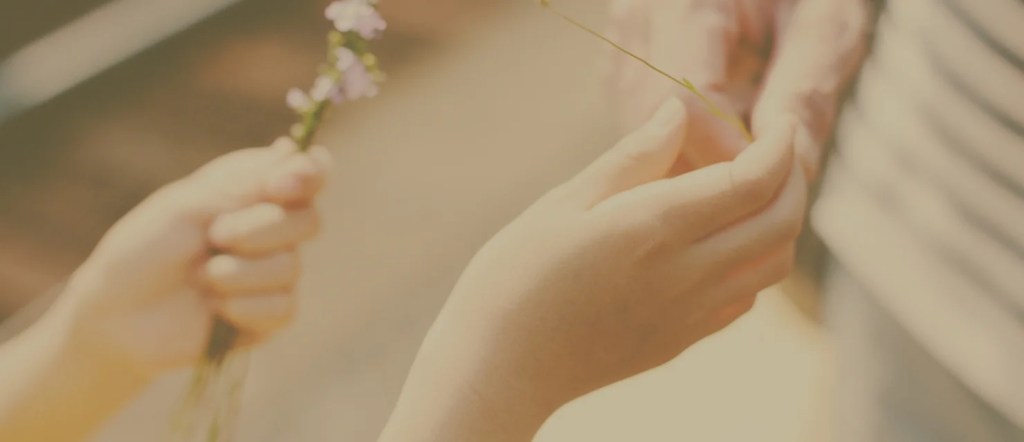
When I was younger, I wasn’t considered pretty. At least not like my friends who were regularly praised for their beauty. It was my personality and easygoing nature that got me a lot of friends and even a few admirers. But I did have one physical attribute that got a lot of praise and attention: my hands.
People have often complimented me on my hands and its various features. This is NOT a flex. I would much traded my hands in an instant for a pretty face, petite stature, and cool girl charisma. But my hands were the showstoppers. And it wasn’t just how they looked, it’s how they felt. People would often stop me, after holding my hands at a church meeting (my old church was really into holding hands during prayer times), to tell me how soft they were.
While my soft hands weren’t part of my identity, they were something I was weirdly proud of. When I started weight training 2 years ago, I started developing callouses on my hands. Unsurprisingly, I hated them. Their hardened look and feel were alien to my normally soft hands. And I was already having a hard time dealing with my hands aging, adding callouses too? No thanks. So, after a while, I stopped going so hard on the weight lifting and the callouses thankfully went away.
And then pull up therapy happened. After my 2nd session of pull up training today, I looked down at my hands and noticed puffy, bulging bumps on my hands. The beginnings of callouses. The ugly bulging polyps that I tried so hard to avoid before. I felt my this visceral reaction building in me. And then I had to pause. If I want to do a pull up, I need them. If my hands don’t have the strength and protection to firmly grip onto the bar, I can’t do all the other work necessary to pull myself up.
And as I try to adjust my view of my callouses, I realize I must also adjust my view of my boundaries. I see that the fervor I have in preserving my soft hands, is identical to the fervor I have in preserving my “easy breezy” attitude towards others. I pride myself in my “soft” exterior that make me likeable and approachable. That way about me where people can feel safe to let their guard down and “really be themselves”. That way about me where if you hurt me, I’d say “that’s ok” and let it go.
Let’s be clear, I wasn’t a doormat. Or at least, I wasn’t a doormat that said “walk all over me”. I was a doormat that said, “I think you should go the other way, but if you walk over me, I get it, it’s ok”. And for the most part, many people in my life would go the other way. And that’s why I’ve always thought I was good at boundaries. Because I could state my preference. But there would still be a few people, who would insist that they must walk over me. And, ”I get it, it’s ok”
What I need to learn, is that it’s not ok. I need boundaries the way my hands need callouses. Not the boundaries where it says “I’d prefer you don’t cross, but if you do, it’s ok. Here’s a warm cookie”. But the boundary that says “I said no. You don’t get to walk over me. If you do not listen, you will face a wall”. For so long, I thought walls were ugly. Christians don’t do walls. So much of our language is in breaking down the walls. Walls mean you’re not easy breezy. You’re in fact the opposite: difficult to uproot.
In Boundaries by Dr. Henry Cloud and Dr. John Townsend, they describe the beauty of boundaries as keeping bad out, and the good in. Boundaries are meant to be an execution of wisdom. Emotionally healthy people don’t see boundaries as ugly. The authors write,“Boundaries are a ‘litmus test’ for the quality of our relationships. Those people in our lives who can respect our boundaries will love our wills, our opinions, our separateness. Those who can’t respect our boundaries are telling us that they don’t love our nos. They only love our yeses, our compliance. ‘I only like it when you do what I want.’”
As I look down at my hands right now, I’m trying to see my budding callouses as incredible signs that I am that much closer to pulling myself up. Some may see them as an eyesore. But I imagine that for those who pull up, they are beautiful proof that I’m doing the work.

 Pull Up Therapy
Leave a comment